With the highly anticipated March Madness tournament underway, I wanted to explore various topics this week related to women in sports. Sports have traditionally been male-dominated, and despite progress, women still fsce disparates in hig profile athletic events.
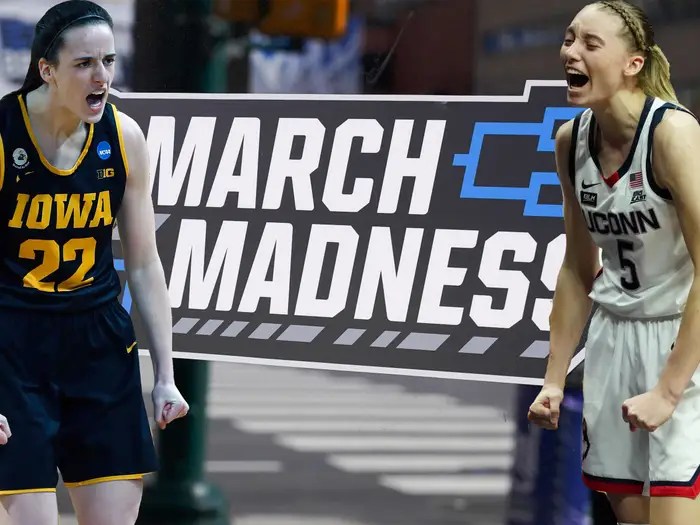
In addition to track and field, I played basketball throughout middle and high school. From the time I was in 7th grade, Paige Bueckers became my favorite player to watch. I remember discussing Bueckers’ commitment to the University of Connecticut with classmates who had no idea who she was. Before Caitlin Clark’s rise and the surge in popularity of women’s college basketball in 2021 and 2022, the Women’s NCAA Tournament often flew under the radar. Hardly anyone was discussing it, making brackets, or placing bets on the games. Fast forward to my junior year of high school, and Caitlin Clark had become the new sensation with her game-winning shots and deep three-pointers. Suddenly, people at my school were talking about women’s basketball.
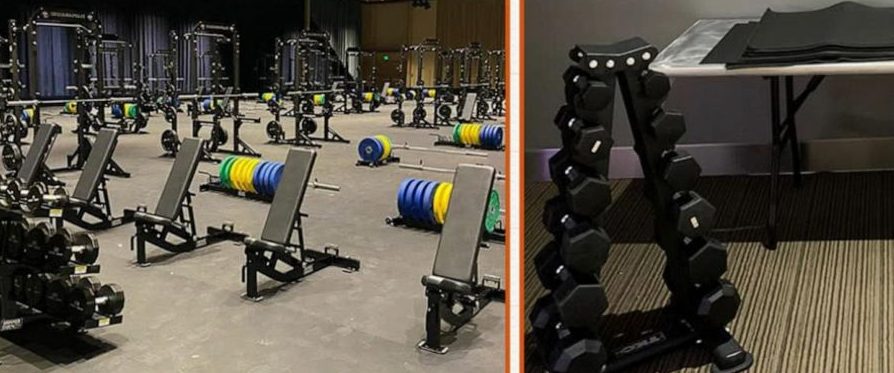
As the popularity of women’s sports grew, so did the conversation about the disparities between male and female college athletics. In 2021, the stark differences in facilities for the men’s and women’s teams sparked public outcry. While the men had access to top-tier resources, the women were left with far less. I remember scrolling through TikTok and seeing videos from women athletes during March Madness, showcasing the stark differences in their experiences. While the women had just a single rack of dumbbells as their “weightroom,” the men had entire racks and sets of equipment. The women received only water bottles and basic t-shirts for making it to the tournament, while the men were given toiletries, blankets, hats, and more. I was so invested in the issue when it was brought to light, especially after reading that the NCAA had released a statement claiming the disparity wasn’t due to money, but space. None of it made sense to me—viewership of the games doesn’t correlate with the level of amenities provided during the tournament.
While audience numbers are a huge component to funding, the media often gives more attention to the men’s tournament, leaving the women’s game with less coverage. Many women’s basketball players also face challenges in securing the same endorsement deals or professional opportunities as their male counterparts. For example, despite standout performances, athletes like Sabrina Ionescu and Caitlin Clark have had to work harder to gain sponsorships that are more easily accessible to male athletes. However, advocacy for increased visibility and equality is making a difference. Organizations like the Women’s Sports Foundation and initiatives such as the NCAA’s commitment to expanding women’s sports coverage are pushing for change. Witht he help of these organizations, female athletes are aided in their advocacy for equal media coverage, sponsorship opportunities, and pay.
I remember in high school, the argument for why men earned more was that more people wanted to watch men’s sports over women’s. While there’s some truth to that, it’s short-sighted to ignore the fact that we have the power to push women’s games into prime viewing hours on TV and promote them just as much as we do men’s sports.
The fight for equality in sports is far from over. When issues are openly discussed, people take notice and disparities begin to be resolved.
 The Unspoken Athlete
Leave a comment